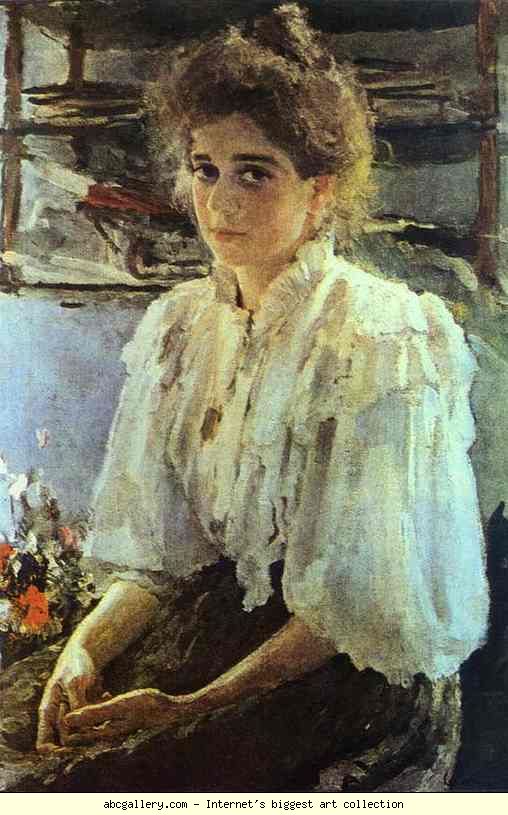
These are the key techniques that have been the biggest help in enabling me to learn to draw -
Simple Forms -Cubes, Spheres, Cylinders, Cones.
Briefly - Practising these forms till you begin to see them everywhere, you begin to simplify and see these forms, usually a combination of, in every object, in a face, in a forest, in a street.
Gesture Drawing
- Or fast sketching. Drawing the `gesture` of an object, a person, whatever is in front at any time.
Always carry a sketchbook and quickly sketch the scene in seconds, waiting for a plane, train, etc.. great fun. No fussing, get it down, take a snapshot with the eye and don`t worry what the drawing will look like.
Negative & Postive Spaces
- Seeing & Drawing the spaces in between things.`Negative` spaces are as important as the `Positive ` forms. You must get both right to draw convincingly.
Artistic Anatomy
- Learning the human form, with endless practise, becoming familiar with the most complicated entity in the universe! The great masters studied the human form rigorously, with a sound
3D knowledgeof the human form everything else becomes easier.
Buy - `Drawing on the Right-Side of the Brain` by Betty Edwards.THE best drawing techniques book of all time.
See - `Proko` on YouTube. Definitely the best drawing techniques on youtube - and great fun!
Awesome, brilliant work from 2 of my favourite American illustrators - Bernie Fuchs & Noel Sickles - look at those negative/positive spaces! All hand drawn & painted in the 50,s, 60`s.
Monday, 5 November 2018
Monday, 29 October 2018
Teach Yourself to Draw 2
Learning to draw is a long, steady process. In fact it never ends! People ask me - `How long would it take me to learn to draw?` I say -` A lifetime`. Even after nearly 40 years I still feel like a beginner, especially when I see the work of the really great masters - which I did a few weeks ago at Kenwood House in Hampstead, London - Rembrandt & my big hero Frans Hals.
I`ve seen many keen beginners give up after a short time. Its that first big hurdle of self-doubt that stops them.
I can remember giving up several times at the beginning. Throwing my art materials on the floor in an angry fit of frustration.
It took me years to be able to sit at my easel and draw or paint for a whole day. What some call the`muse` comes to help. The ability to concentrate, to be in the `zone`, when time passes & one is lost in a deep,
focussed, concentrated state of being, similar to meditation. I don`t have to be in the right mood to draw,
as soon as I sit at my easel and start to draw I am off and don`t want to be interrupted for the rest of the day.
As in learning to play a musical instrument , it is best to do a bit every day, it could be a session of 2 hours or just 10 minutes sketching on a park bench. 15 minutes per day is better than 3 hours once a week. The mind will give up protesting that this a waste of time and start to enjoy this pleasant unusual daily habit.
I love drawing & thank God that I have an occupation that I never tire of doing, so don`t give up!
Thursday, 25 October 2018
Teach Yourself to Draw No1.
How do artists manage to draw such complicated scenes, objects, people etc.?
By simplifying. Learn the basic forms - Cube, Cylinder, Sphere, Cone. Then you will be able to see through the surfaces and draw the underlying forms. It was a revelation to me, With practise (daily if possible) you
can see these forms everywhere you look and draw even complicated things by simlpifying them down to their basic shapes, their real 3D forms.
Monday, 15 October 2018
Teach Yourself to Draw
I`m coming up to 40 years as a professional artist. I have no degree, I am self-taught, or rather, I have learnt from the thousands of artists who have gone before me.
So now I feel it is time to pass on what I have learnt and how I learnt and how I ended up busy doing portraits, caricatures, illustrations - 99% on command and rarely without a project on the go.
This blog will be dedicated to helping people to learn how to teach themselves to draw, which is easier now than when I first started, now online there are so many learning resources-but how to proceed?
My goal is to lead the beginner through the confusing mass of drawing techniques.
40 years ago,desperate for guidance, I went to public librairies for books on drawing techniques, luckily,
as I was living in New Zealand at the time, they had access to American books and one of them was a revelation to me, it explained one the `secrets` I could not understand - how did artists create drawings that
looked 3D?
These are the actual words that, as Americans say, knocked my socks right off! -
Wednesday, 30 August 2017
Tuesday, 1 August 2017
Sir John Tenniel (1820-1914)
Was a political cartoonist at Punch magazine for most of his creer but is known for his superb illustrations for Lewis Carrolls - ` Alices Adventures in Wonderland`, `Through the Looking Glass and what Alice found There` and `Jabberwocky`. I never tire of looking at them, grotesque, funny and straight out of a wierd dream world, perfect for those amazing stories.
Wednesday, 26 July 2017
Live portraits & caricatures at Edgware
4 charming people sat for me last weekend at The Broadwalk Edgware - a young couple from Rumania. a Ghanaian lady & an 88 year old lady with the spirit & attitude of an 18 year old.
I will be at Luton this Friday 28th & Saturday 29th.
For more dates of live appearances - www.stanhurr.co.uk
I will be at Luton this Friday 28th & Saturday 29th.
For more dates of live appearances - www.stanhurr.co.uk
Subscribe to:
Posts (Atom)